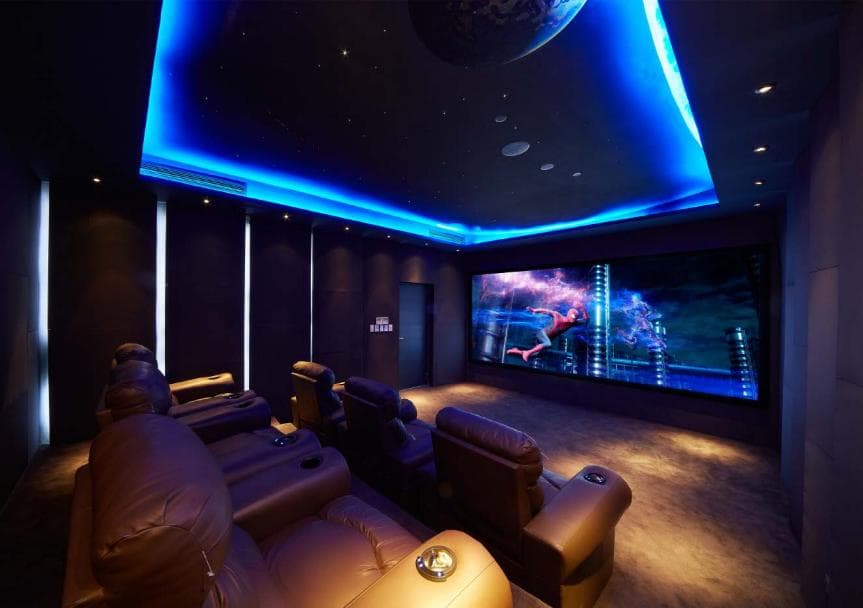
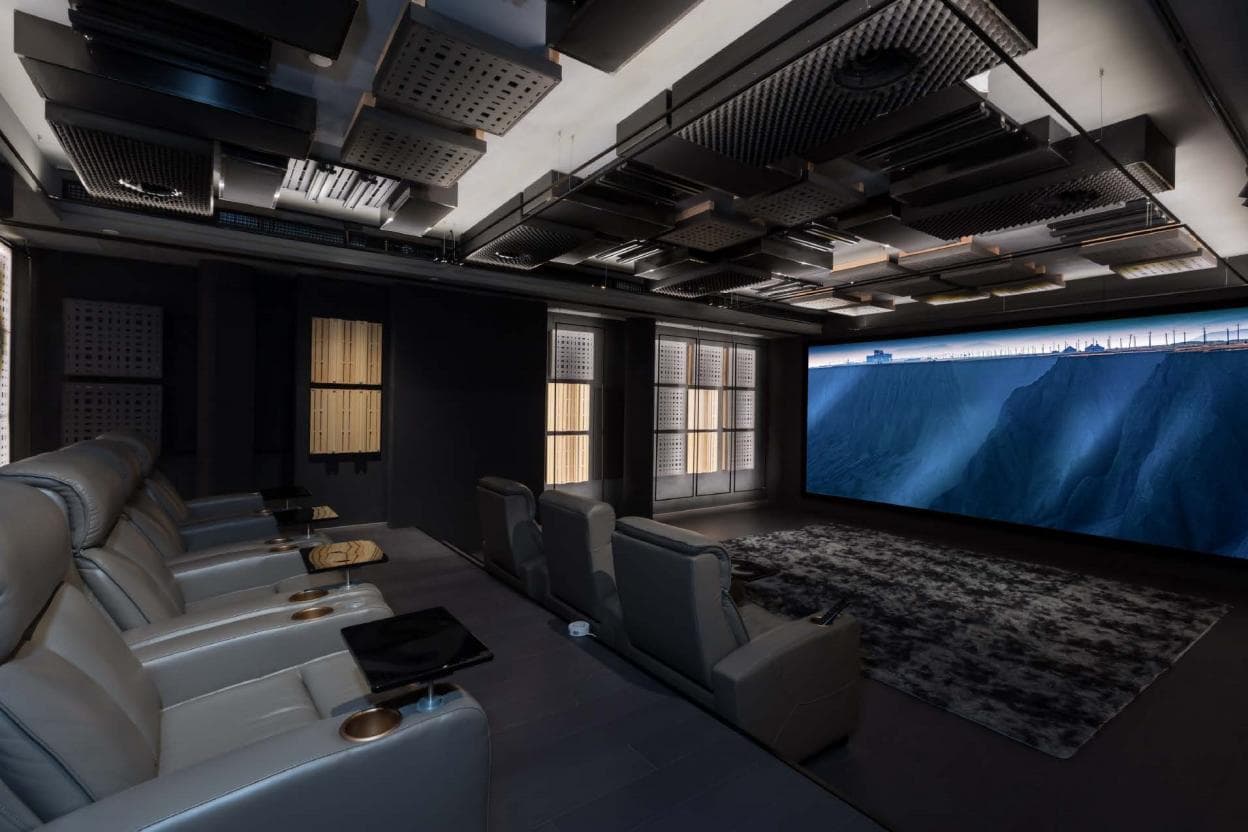
A private cinema succeeds when the room, not the equipment list, sets the direction. Proportion, circulation and material choices establish the conditions for immersion long before a screen is installed.
Early collaboration allows sightlines, speaker locations and acoustic treatments to become part of the architecture. Each decision can then support performance without reading as a technical afterthought.
Begin before the room is built
Ceiling depths, wall build-ups and lighting positions all affect what the audience sees and hears. Coordinating them together protects both the visual calm of the room and the precision of the experience.
The result is a cinema that belongs to the home: comfortable in everyday use, exacting when the lights fall, and composed from every seat.